
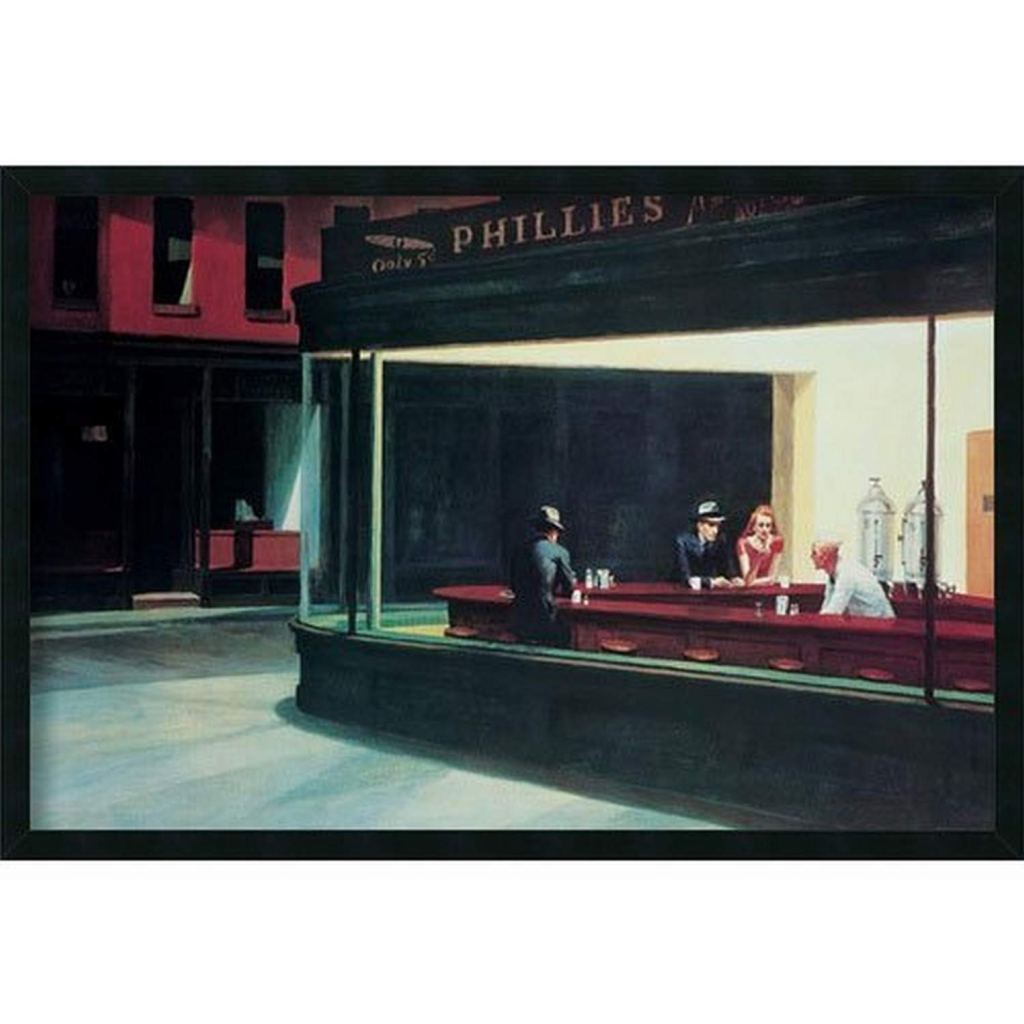
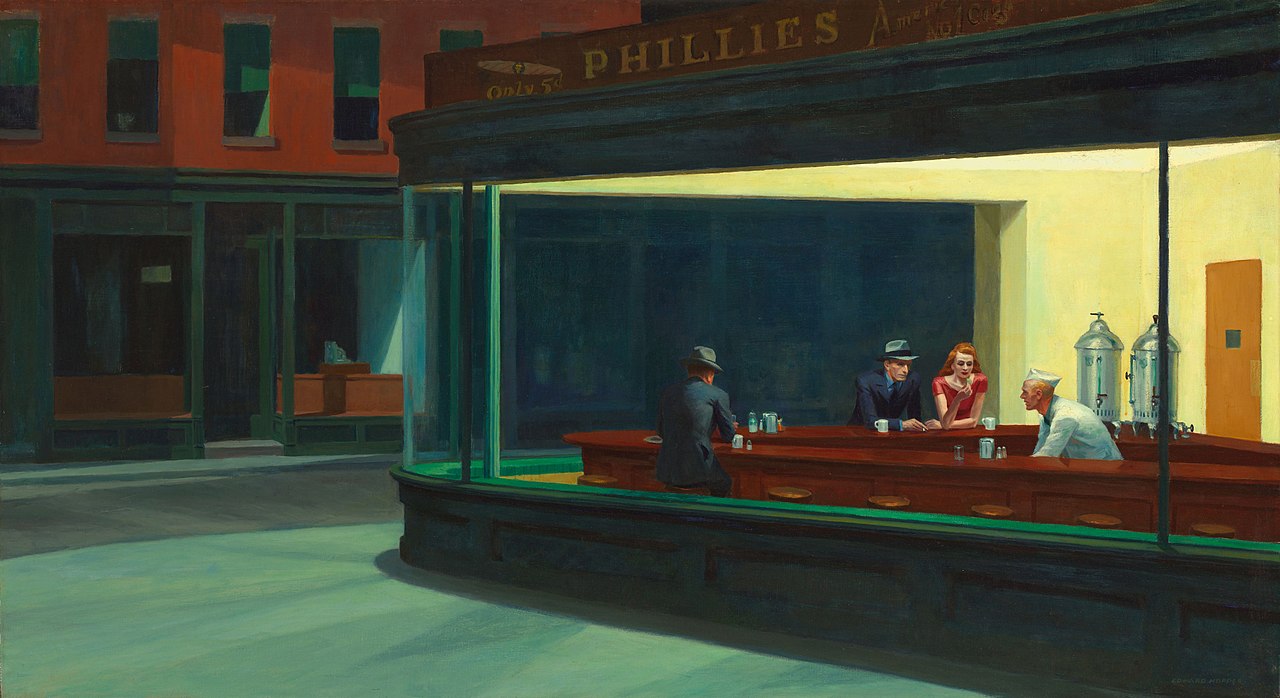
Edward Hopper. Nighthawks. 1942.
Subdued colour palettes, and undefined horizon lines. With New York City as a backdrop, the 20th century American realist painter Edward Hopper depicts urban loneliness like none other. Capturing the feelings of loneliness when amidst a crowd, the feelings of disconnect and alienation when among one’s kins, and of the sense of belonging and not simultaneously – firmly places Hopper among the giants of modern art.
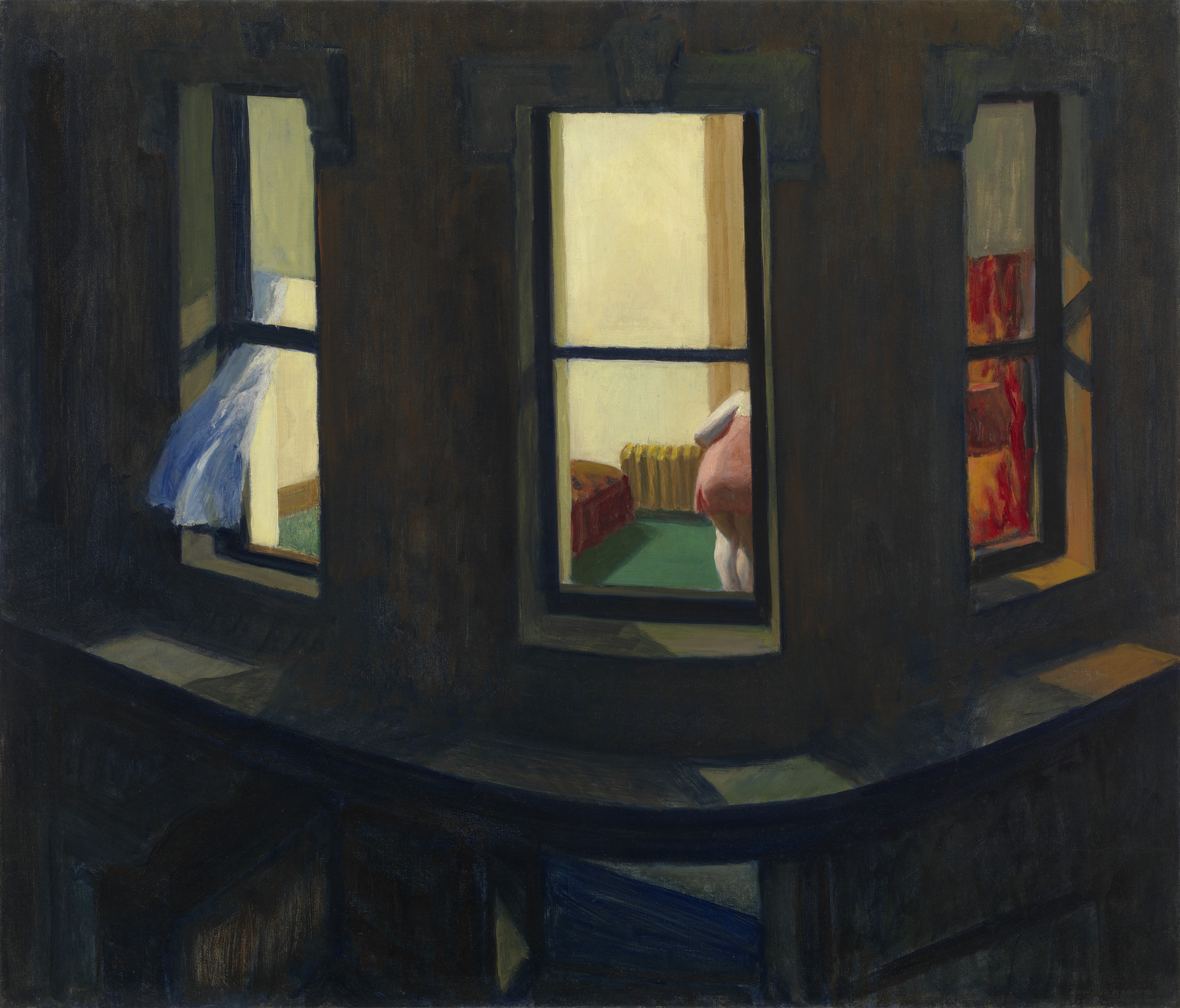
Edward Hopper. Night Windows. 1928.
Full of contradictions – minimalist in composition yet emotionally intrinsic, static environments however figures in motion, surrounded by people but lonely at heart – Hopper’s art undeniably flirts with duality. With the profound ability to capture everyday scenes with an immense sense of isolation, contemplation, melancholy, and introspection – and as a keen observer of everyday life – Hopper strikingly depicts solitude, ambiguity, resignation and contemplation in an urban setting. With an uncanny ability to capture life’s fleeting moments with a peculiar ephemeral sense, the paintings certainly are reminiscent of cinematic shots.
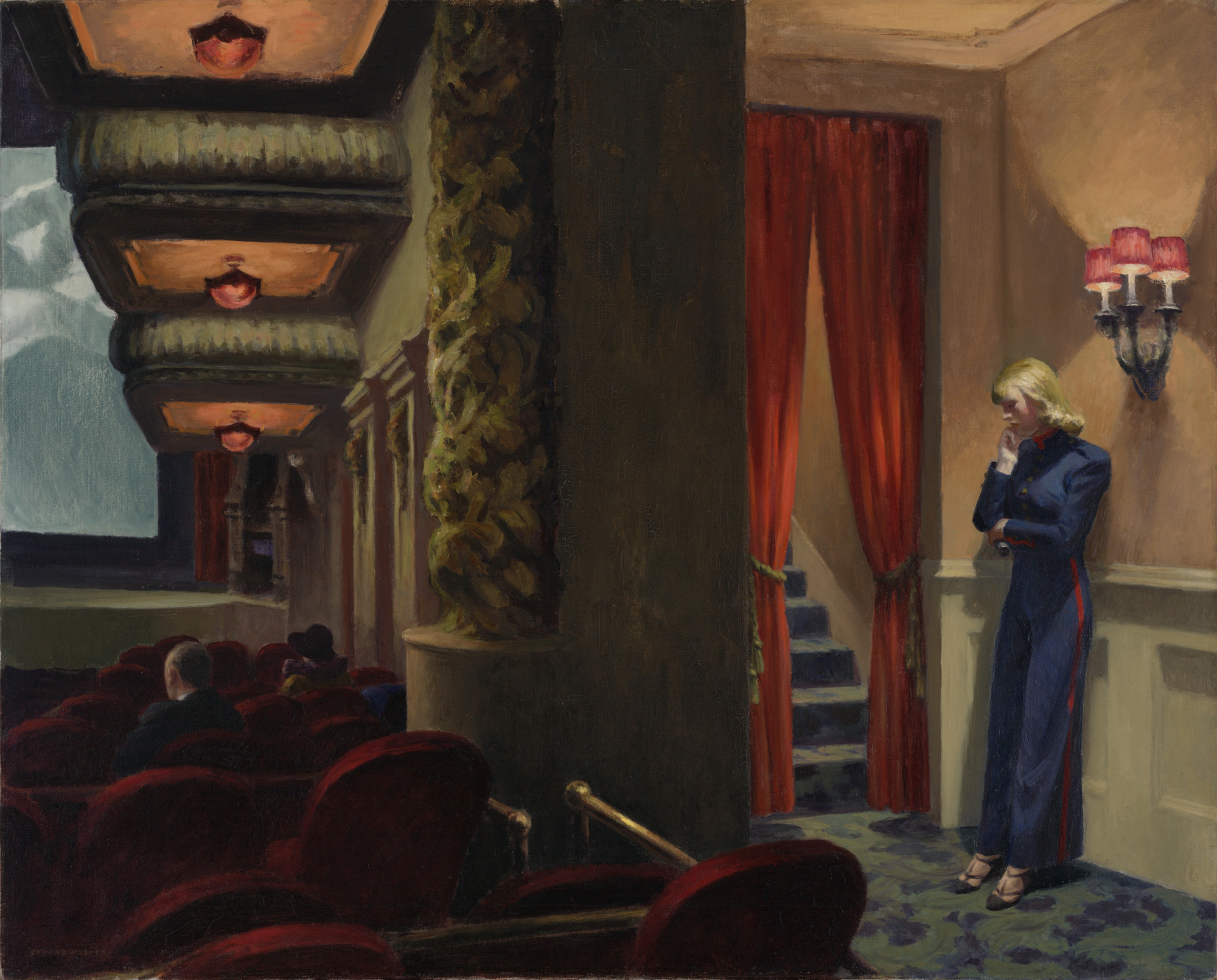
Edward Hopper. New York Movie. 1939.
Despite Hopper’s nature as an introverted man, it is through his work we uncover the psychology of (wo)man. Even though without a strong remembrance of my first encounter with Hopper’s paintings, they have grown on me over time. With the exceedingly ordinary moments portrayed, it lends an appreciation for the complexity of strangers we see everyday, encouraging us to ponder about the individuals – who they are, what they think and what brought them to this moment in life. A snapshot of complicated emotions – that we all feel – however only momentarily. On the commute, strangers passing by on the streets, and anonymous faces looking through the window panes – they all have a story. And I wonder, and I ponder.
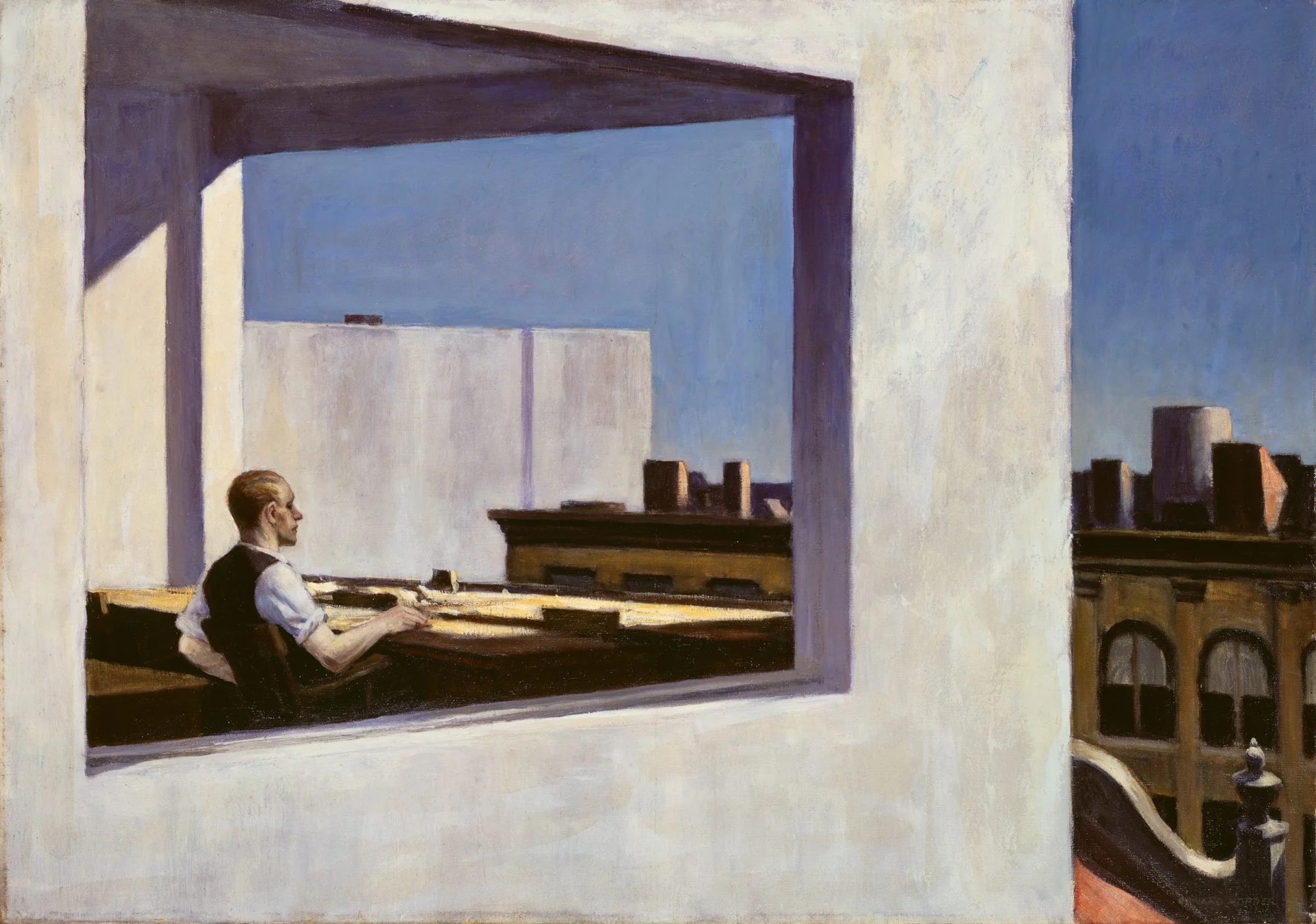
Edward Hopper. Office in a Small City. 1953.
As a silent relay of unspoken emotions and stories, and with its solitary figures confronting us with our own introspection and perception of the world surrounding us, Hopper’s magic has not diminished through the passing of time. Conversely, it is even the more profound in our current era of epidemic urban loneliness – resonating with millions worldwide. With its open narrative style, and layers of emotional complexity, it has us contemplating and interpreting indefinitely.
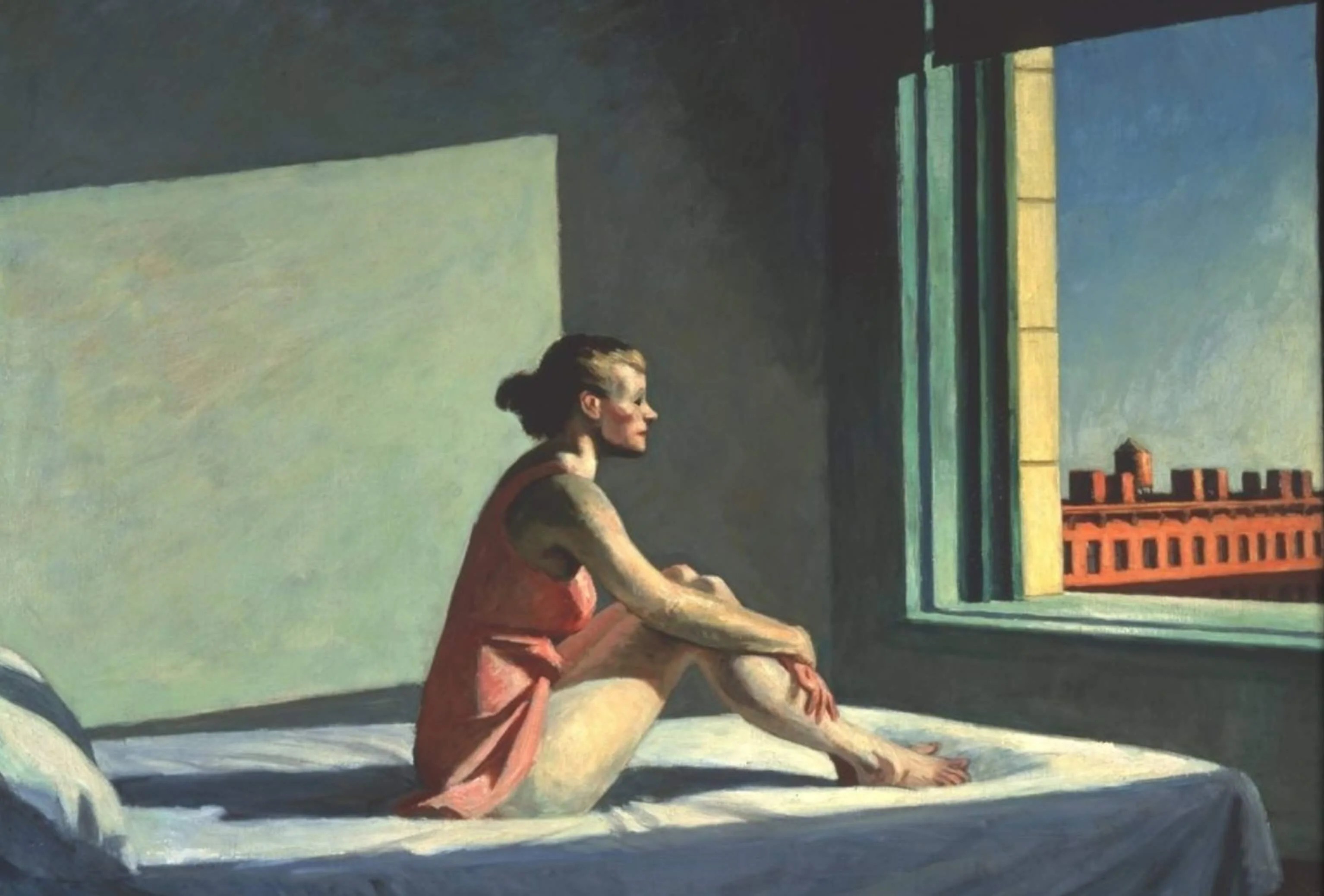
Edward Hopper. Morning Sun. 1952.
 D.Z.
D.Z. 
Leave a comment